405-803-8770
Herniated Disc vs Bulging Disc: Understanding the Difference
Introduction
Back pain is one of the most common health concerns adults experience. Many people who come into a chiropractic office have already heard terms like bulging disc or herniated disc, often after a scan or from researching their symptoms online. While the terms are sometimes used interchangeably, they are not exactly the same.
Understanding the difference between a bulging disc and a herniated disc can help people make better decisions about their care. Both conditions involve the spinal discs, which are important structures that allow the spine to move, absorb shock, and protect the nerves that travel from the spinal cord to the rest of the body.
For individuals searching for help with disc problems in Oklahoma City, learning how these conditions develop and how they can be managed is an important first step toward recovery.
Understanding the Role of Spinal Discs
The spine is made up of a series of bones called vertebrae. Between each vertebra sits a disc that acts like a cushion. These discs help the spine move smoothly while absorbing stress from daily activities like walking, bending, and lifting.
Each disc has two main parts.
The outer portion is called the annulus, which is a strong fibrous ring.
The inner portion is called the nucleus, which has a softer, gel-like consistency.
Healthy discs allow the spine to move while helping distribute pressure evenly across the spinal column. However, when discs become injured or begin to degenerate over time, they can begin to change shape or position, which may lead to symptoms.
What Is a Bulging Disc?
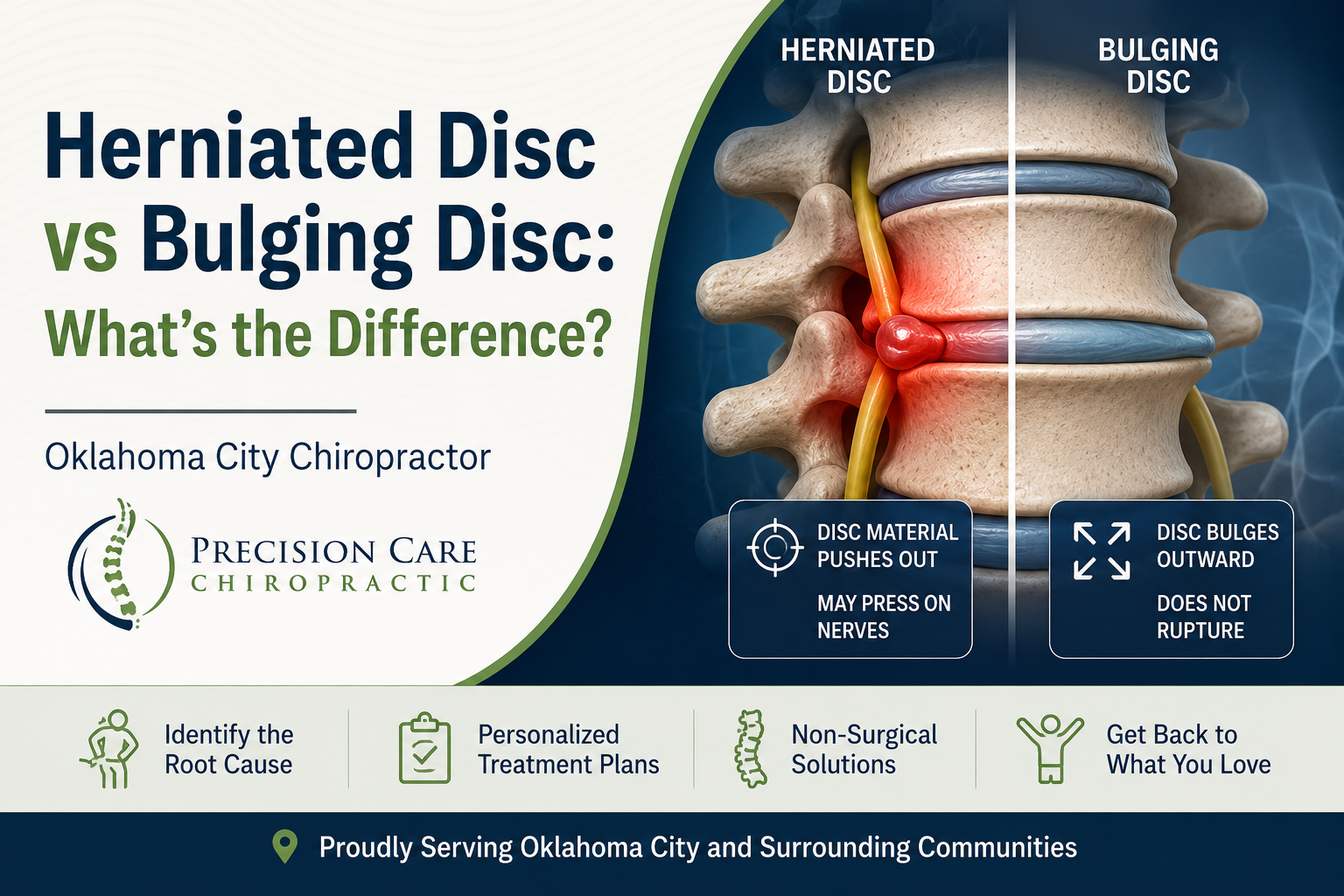
A bulging disc occurs when the outer layer of the disc weakens and the disc begins to extend outward beyond its normal boundary.
You can think of it like a tire that begins to bulge when pressure builds inside. The outer ring remains intact, but the disc pushes outward slightly.
Bulging discs are actually quite common and are often seen in imaging studies, especially as people age. In many cases, a bulging disc does not cause symptoms. However, if the disc bulge presses against a nearby nerve, it can lead to discomfort or nerve-related symptoms.
Common symptoms associated with a bulging disc may include:
• localized back or neck pain
• stiffness in the spine
• numbness or tingling in the arms or legs
• occasional radiating pain
When a bulging disc places pressure on a nerve root in the lower spine, it may contribute to sciatica, which causes pain traveling down the leg.
What Is a Herniated Disc?
A herniated disc occurs when a portion of the inner gel-like material of the disc pushes through a tear or a weakness in the outer ring.
This condition is sometimes referred to as a ruptured disc or slipped disc, although the disc itself does not actually slip out of place.
Because the inner portion of the disc has pushed outward, a herniated disc can create more significant irritation to nearby nerves. This is why herniated discs are more likely to produce symptoms that travel into the arms or legs.
Common symptoms of a herniated disc may include:
• sharp or burning pain
• pain radiating down the arm or leg
• numbness or tingling
• muscle weakness
• difficulty sitting or standing for long periods
Many individuals searching for treatment for herniated discs in Oklahoma City are experiencing symptoms that interfere with daily activities such as walking, working, or sleeping comfortably.
Key Differences Between Bulging and Herniated Discs
Although both conditions involve the spinal discs, there are some important differences.
A bulging disc occurs when the disc extends outward but the outer layer remains intact.
A herniated disc occurs when the inner material of the disc pushes through a tear in the outer layer.
Another key difference is symptom severity. Bulging discs may produce mild symptoms or none at all, while herniated discs are more likely to cause nerve irritation and radiating pain.
However, both conditions can lead to similar symptoms if a nerve becomes compressed.
Why Disc Injuries Happen
Disc problems can develop for several reasons. In many cases, they are the result of gradual wear and tear rather than a single injury.
Common contributing factors include:
Repetitive stress
Daily activities such as bending, lifting, or prolonged sitting can gradually stress the discs.
Poor spinal movement
When certain joints in the spine lose proper movement, other areas of the spine may compensate and experience increased pressure.
Disc degeneration
As discs age, they can lose hydration and flexibility, making them more vulnerable to injury.
Sudden strain or injury
Lifting something improperly or twisting suddenly can sometimes cause a disc injury.
Because multiple factors may contribute to disc problems, identifying the underlying cause is an important part of effective care.
Conservative Treatment Options
Many people are surprised to learn that a large number of disc injuries improve without surgery. Conservative care is often the first approach recommended for many patients experiencing disc-related symptoms.
Treatment options may include:
• chiropractic care
• spinal decompression therapy
• targeted movement and rehabilitation strategies
• posture and ergonomic guidance
Chiropractic care focuses on restoring healthy spinal motion and reducing mechanical stress on the discs and surrounding structures.
For individuals experiencing disc-related pain in Oklahoma City, conservative treatment can often help reduce nerve irritation and support the body’s natural healing process.
The Importance of Proper Evaluation
Not all back pain is caused by disc problems. That is why a thorough evaluation is necessary before beginning treatment.
A chiropractic evaluation may include:
• discussion of symptoms and health history
• movement and orthopedic testing
• neurological assessment
• imaging such as X-rays when appropriate
If symptoms suggest a more significant disc injury, advanced imaging such as an MRI may be recommended to better understand the condition.
The goal of this evaluation is to determine the exact source of the problem so that care can be tailored to the individual.
When to Seek Professional Care
Some people try to manage back pain on their own for months before seeking help. However, certain symptoms should not be ignored.
You may want to seek professional evaluation if you experience:
• persistent back pain lasting more than a few weeks
• numbness or tingling in the arms or legs
• weakness in the extremities
• pain that worsens when sitting or bending
Early evaluation can help identify the underlying cause and prevent symptoms from becoming more severe.
Disc Care in Oklahoma City
Precision Care Chiropractic in Oklahoma City provides personalized chiropractic care for individuals experiencing chronic back pain, disc injuries, and nerve irritation.
With more than 20 years of clinical experience, Dr. Betty Bampoe focuses on identifying the root cause of spinal dysfunction and guiding patients through care plans designed to restore mobility and improve overall spinal health.
The goal of care is not simply temporary relief, but helping patients regain the ability to move, work, and live comfortably again.
Taking the Next Step
Understanding the difference between a bulging disc and a herniated disc can help individuals better understand their symptoms and treatment options. Many people are able to improve with conservative care that focuses on restoring spinal movement and reducing pressure on affected nerves.
If you are experiencing ongoing back pain, leg pain, or symptoms related to a possible disc injury, seeking a professional evaluation can help determine the best course of action.
Not sure what your symptoms mean? Take the OKC Sciatica Check to organize your symptoms and understand what next step may make sense.
Take the OKC Sciatica CheckFor those searching for chiropractic care for disc problems in Oklahoma City, a thorough evaluation can provide clarity and help you begin the path toward recovery.
Helpful related resources: Disc & Sciatica Relief, Spinal Decompression Therapy, What to Expect, and FAQ.